

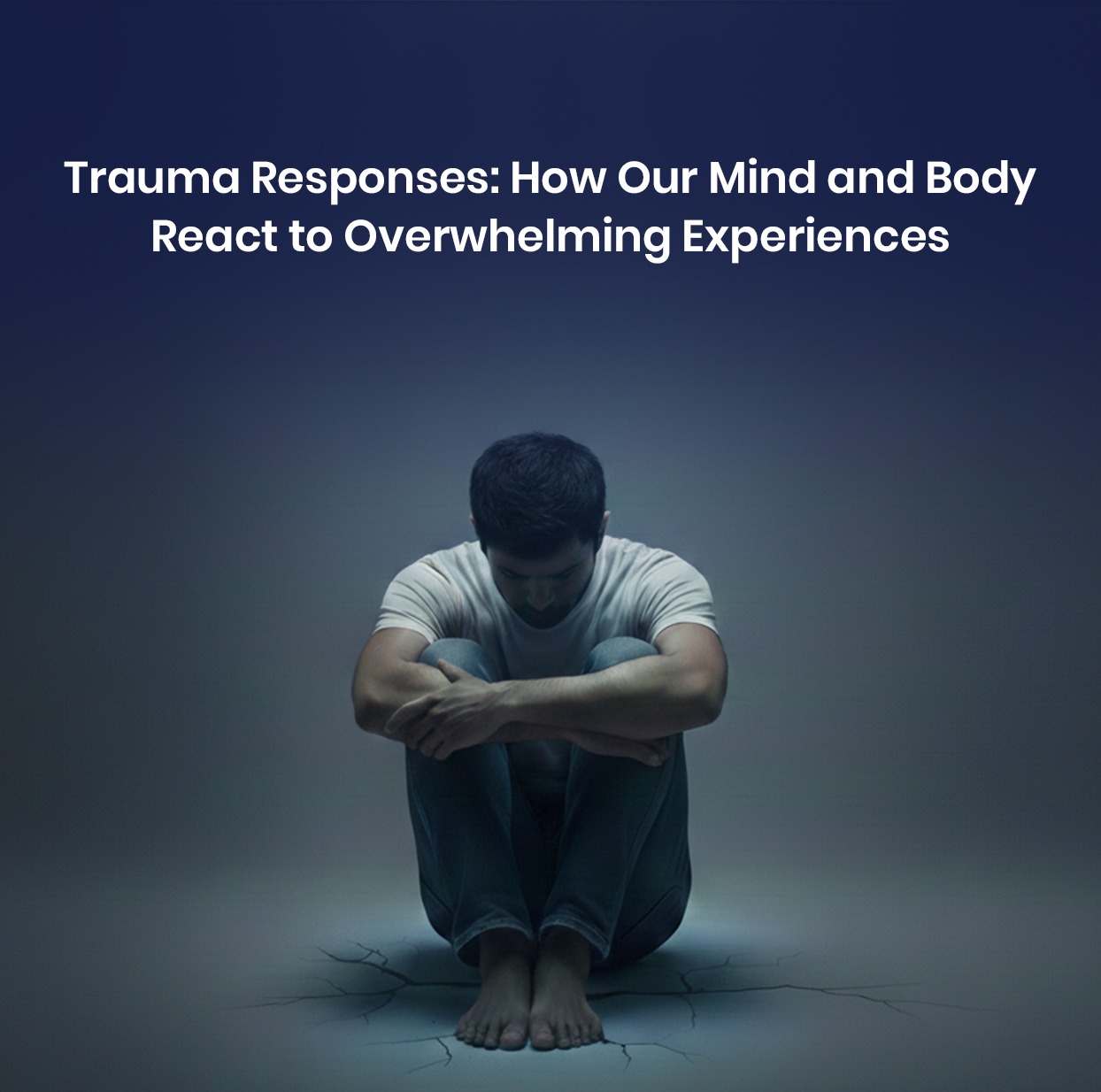
A large percentage of people across the world experience some form of trauma in their lifetime, even if they don’t always recognise it as trauma. Across the globe, people are silently carrying emotional wounds that come from overwhelming experiences their mind and body were not prepared to handle. Trauma can happen anywhere. It can happen in the office through public humiliation or pressure, in school through bullying or body shaming in front of others, or at home through emotional neglect, harsh words, or unsafe environments. Trauma can happen in a flash of seconds. It can be caused by a sudden accident, an unwanted physical touch, sexual abuse, rape, or a deeply frightening moment that leaves the body frozen. Sometimes it is a mental trauma that slowly builds through repeated emotional hurt. What stays with us is not just the incident, but the way it makes us feel unsafe in our own body and mind.
Here’s how our mind and body react to such overwhelming situations and experiences.
The mind becomes restless and constantly worried
After trauma, the mind struggles to settle down. Thoughts keep racing, and there is a constant feeling that something bad might happen again. Even in safe situations, the brain stays alert, replaying memories or imagining worst-case scenarios. This mental unrest can make it difficult to relax, focus on work, or enjoy simple moments of peace.
Sleep gets disturbed and the body feels tired
One of the most common responses to trauma is loss of sleep. The mind stays active at night, replaying memories or feeling anxious without a clear reason. Some people struggle to fall asleep, while others wake up suddenly with fear or bad dreams. Over time, this lack of rest makes the body feel exhausted, heavy, and emotionally drained, affecting mood and daily functioning.
The body holds tension and feels uneasy
Trauma often shows up in the body as tight shoulders, headaches, stomach discomfort, or general body pain. The muscles remain tense as if the body is still preparing for danger. Even when life seems normal, the body may feel restless or uncomfortable. This physical tension is the nervous system’s way of staying alert, even when the threat has passed.
Emotions become overwhelming or completely numb
Some people feel emotions too strongly after trauma, getting easily irritated, angry, or tearful. Others feel emotionally numb, as if they are disconnected from their own feelings. Both reactions are protective responses. The mind either becomes highly sensitive to emotions or tries to shut them down to avoid pain. Over time, this can affect how a person connects with loved ones.
Small triggers bring back big reactions
Certain sounds, words, places, or situations can suddenly bring back intense fear or sadness. These triggers remind the mind and body of the original experience, even if the current situation is safe. The reaction may feel confusing or embarrassing, but it is the body remembering what the mind may not fully understand.
Confidence and self-worth slowly reduce
Trauma can deeply affect how a person sees themselves. People may start blaming themselves for what happened, feeling weak, broken, or unworthy. This loss of self-worth can affect relationships, career growth, and personal choices. The inner voice becomes harsh, repeating negative beliefs formed during painful experiences.
Trust in people and the world changes
After trauma, trusting others can feel difficult. Some people become distant and avoid emotional closeness, while others fear being abandoned or hurt again. Relationships may start to feel unsafe or overwhelming. This change in trust is not intentional; it is the mind trying to protect itself from further pain.
Conclusion
Trauma responses are not flaws in your personality; they are signs that your mind and body tried to protect you during overwhelming moments. Healing is about slowly teaching your nervous system that you are safe now. Professional support can make this journey gentler and more effective. Many people find deep healing through the Best individual counselling in Kerala, where they can openly share their experiences without fear of judgment. With guidance from experts offering the Best psychology counselling in Kerala, individuals can understand their trauma responses, rebuild confidence, and restore emotional balance. For those who prefer support from home, the Best Online counselling services in Kerala provide a safe and accessible way to begin healing. You deserve support, understanding, and a life that feels peaceful again.