

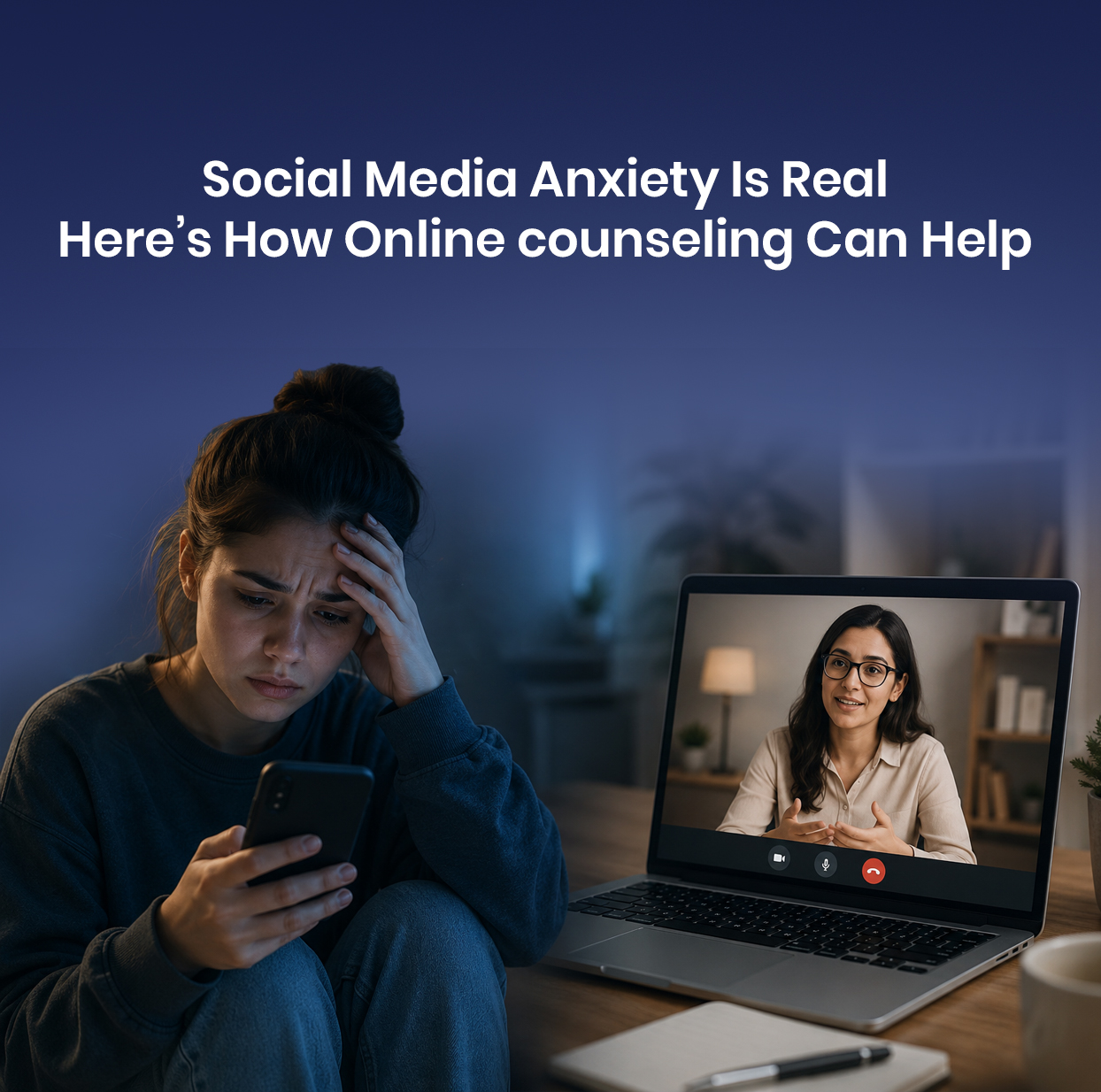
“You close Instagram after scrolling for an hour, but instead of feeling entertained, you feel exhausted. Someone got promoted. Someone bought a new house. Someone is traveling the world. Suddenly, your own life feels smaller than it did an hour ago.”
For millions of people, this feeling is becoming increasingly familiar.
Social media has transformed the way we connect, communicate, learn, and entertain ourselves. Platforms like Instagram, Facebook, TikTok, YouTube, and Snapchat keep us connected to the world at every moment. While these platforms offer many benefits, they have also introduced a new challenge that mental health professionals are seeing more often than ever before, social media anxiety. Many people find themselves constantly checking notifications, worrying about how their posts are perceived, comparing their lives with others, or feeling left out when they see what others are doing. What starts as a quick scroll can sometimes leave a person feeling anxious, stressed, inadequate, or emotionally drained.
But is social media anxiety real? And if it is, how can we protect our mental well-being in a digital-first world?
What Is Social Media Anxiety?
Social media anxiety refers to feelings of stress, nervousness, fear, or emotional discomfort related to social media use.
It may appear in different ways, including:
- Feeling anxious when unable to check your phone
- Constantly comparing yourself with others
- Fear of missing out (FOMO)
- Worrying about likes, comments, or followers
- Feeling pressured to maintain a perfect online image
- Becoming overwhelmed by news, opinions, and online discussions
Unlike occasional stress, these feelings can become persistent and begin affecting daily life, relationships, productivity, and self-esteem.
How Much Time Are We Spending on Social Media?
Studies show that the average person spends approximately two to three hours every day on social media platforms. For teenagers and young adults, the number is often much higher.
When you add up those hours over a year, it amounts to hundreds of hours spent scrolling, watching reels, viewing stories, and consuming content.
While social media itself isn’t harmful, excessive usage can reduce sleep quality, limit face-to-face interactions, and increase emotional stress.
Is Social Media Anxiety Really a Growing Problem in India?
Yes!!!
India has one of the world’s largest social media user populations, with hundreds of millions of active users across multiple platforms. Mental health experts are increasingly observing anxiety symptoms linked to excessive social media exposure, particularly among adolescents and young adults. Research has consistently found associations between heavy social media use and increased rates of anxiety, loneliness, low self-esteem, and depressive symptoms. The constant need to stay connected and updated can create emotional pressure that many people struggle to recognize.
Why Social Media Triggers Anxiety
1. The Comparison Trap
Most people post their happiest moments online.
We see vacations, achievements, celebrations, fitness transformations, and smiling selfies. What we rarely see are struggles, failures, disappointments, and ordinary days.
When people compare their everyday reality to someone else’s highlight reel, feelings of inadequacy often emerge.
2. Fear of Missing Out (FOMO)
Have you ever seen friends attending an event without you?
Or watched someone enjoy experiences you wish you had?
FOMO creates a sense of exclusion that can trigger sadness, insecurity, and anxiety. Even when nothing is actually wrong, social media can make people feel as though they’re constantly missing something important.
3. Validation Through Likes and Comments
Many users unconsciously begin measuring their self-worth through online engagement.
Questions like:
- “Why didn’t my post get enough likes?”
- “Why did they stop following me?”
- “Why is everyone else’s content performing better?”
can create a cycle of emotional dependence on digital validation.
4. Endless Information Overload
Every scroll introduces new information.
News updates, political discussions, celebrity stories, advertisements, trends, opinions, and personal updates compete for attention simultaneously.
The brain never gets enough time to process one thing before another appears, creating mental fatigue and emotional exhaustion.
Which Age Groups Are Most Affected?
Although social media anxiety can affect anyone, certain groups are particularly vulnerable.
Teenagers (13–19 Years)
Teenagers are still developing their sense of identity and self-worth. Constant comparison, cyberbullying, peer pressure, and social validation can significantly affect emotional well-being.
Young Adults (20–35 Years)
This group often compares career progress, relationships, finances, and lifestyle choices with others online. Seeing peers achieve milestones can create pressure and self-doubt.
Adults (35+ Years)
Adults may experience anxiety related to parenting comparisons, professional expectations, financial success, and information overload.
When Social Media Starts Affecting Mental Health
Social media may be harming your mental well-being if you notice:
- Increased anxiety after scrolling
- Difficulty concentrating
- Reduced self-confidence
- Sleep disturbances
- Constant urge to check notifications
- Feeling emotionally drained
- Avoiding real-life interactions
- Increased feelings of loneliness
If these symptoms continue for weeks or months, professional support may be beneficial.
Can Social Media Use Lead to Depression?
Excessive social media exposure does not directly cause depression in every person. However, studies suggest that prolonged comparison, isolation, cyberbullying, and negative self-evaluation can contribute to depressive symptoms.
For individuals already struggling emotionally, social media may intensify existing challenges.
In such situations, online therapy for depression can provide a safe and accessible space to explore emotional concerns, identify unhealthy thought patterns, and develop healthier coping mechanisms.
How Online Counseling Can Help
One of the biggest advantages of modern mental health care is accessibility.
Today, professional online counseling services allow individuals to connect with qualified therapists from the comfort of their homes. This can be especially helpful for students, working professionals, and individuals living in areas where mental health resources are limited.
A therapist can help individuals:
- Understand anxiety triggers
- Improve self-esteem
- Reduce social comparison habits
- Develop healthier digital boundaries
- Build emotional resilience
- Improve overall mental well-being
Practical Ways to Reduce Social Media Anxiety
Monitor Your Screen Time
Most smartphones provide screen-time tracking features. Reviewing your usage can help identify unhealthy patterns.
Set Daily Limits
Consider limiting social media use to specific periods rather than checking throughout the day.
Turn Off Unnecessary Notifications
Reducing interruptions can lower anxiety and improve concentration.
Curate Your Feed
Unfollow accounts that trigger comparison or negativity and follow content that inspires, educates, or supports personal growth.
Schedule Digital Detox Periods
Take regular breaks from social media to reconnect with offline experiences.
Prioritize Real-Life Relationships
Face-to-face conversations and meaningful social interactions remain powerful protectors of mental health.
When Should You Seek Professional Help?
If social media anxiety is interfering with your studies, work, relationships, sleep, or emotional well-being, it may be time to seek professional guidance.
Mental health professionals can provide effective strategies through stress management and counselling, helping individuals regain control over their thoughts, emotions, and daily routines.
Seeking support is not a sign of weakness. It is a proactive step toward creating a healthier relationship with technology and yourself.
Final Thoughts
Social media is not inherently good or bad. It is a tool. The impact it has on our lives largely depends on how we use it. However, when scrolling begins to create anxiety, self-doubt, loneliness, or emotional exhaustion, it’s important to pay attention.
Your mental health deserves the same care and attention you give to every other aspect of your life.
Always keep in mind that your worth is not measured by likes, followers, comments, or views. Real fulfilment comes from meaningful relationships, personal growth, and living authentically, both online and offline.
If social media anxiety is affecting your daily life, reaching out for professional support can be the first step toward finding balance, confidence, and peace of mind.