

Anxiety is not always a constant condition, it often comes in sudden waves that feel intense and overwhelming. Sometimes it feels like a sharp discomfort in the chest, a tightness in the body, or a restless pressure in the mind. It may not be a medical emergency, but in that moment, it can feel just as frightening and real.
Many people experience anxiety in everyday situations. It can appear while sitting outside a scanning room, waiting for a medical consultation, or before receiving important blood test results. It can show up in professional spaces too, before an important office meeting, during a presentation, or while making a critical decision. Even routine moments can suddenly feel heavy when anxiety takes control.
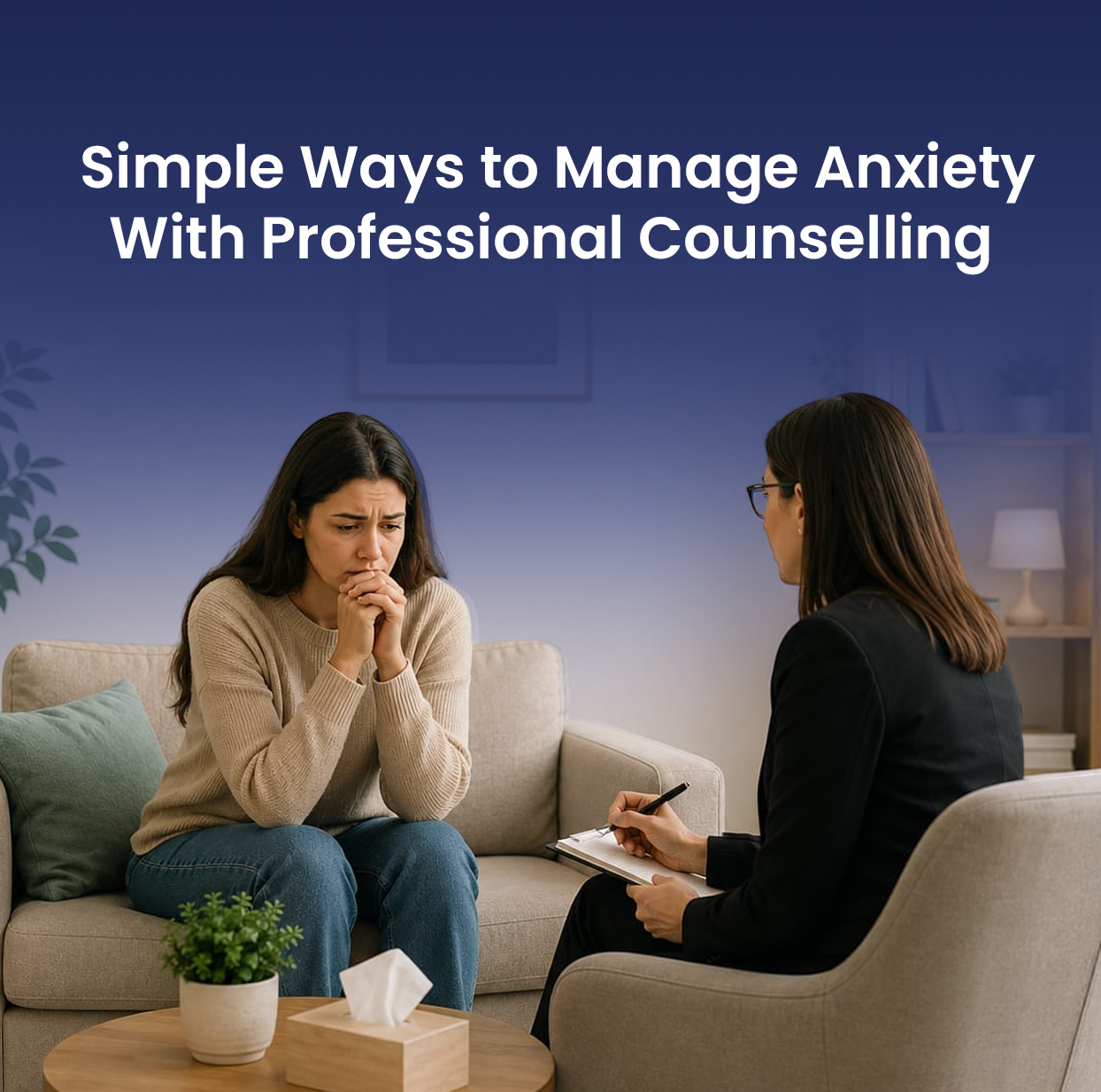
In such situations, people often feel stuck between thoughts, fear, and physical discomfort. This is where professional counselling becomes important. It provides simple, practical ways to understand these reactions and manage them in a healthier manner. Instead of struggling alone, counselling helps individuals recognize what is happening in the mind and body, and gently guides them toward control and clarity. Today, many people also benefit from online counseling services, which make professional support more accessible and convenient regardless of location.
With such support, anxiety does not have to feel overwhelming or unmanageable. It can be understood, handled, and gradually reduced through simple techniques and consistent guidance.
Here are seven simple ways professional counselling helps manage anxiety.
1. Understanding What Triggers Anxiety
One of the first steps in counselling is identifying what actually triggers anxiety. Many people experience anxious feelings without clearly knowing why they happen.
A counsellor helps individuals explore situations, thoughts, or experiences that lead to anxiety. It could be fear of failure, health worries, work pressure, or past experiences. Once the trigger is identified, anxiety becomes less confusing and more manageable because the person begins to understand the “why” behind the feeling.
2. Learning Simple Breathing Techniques
Professional counselling often teaches easy breathing methods that can be used in any situation.
One common technique is slow, deep breathing—inhale slowly, hold for a few seconds, and exhale gently. This helps slow down the heartbeat and relax the body. It sends a signal to the brain that there is no immediate danger.
With regular practice, breathing techniques become a quick and reliable way to calm anxiety in moments like waiting rooms, meetings, or stressful situations.
3. Reframing Negative Thoughts
Anxiety is often driven by negative thoughts such as “something bad will happen” or “I cannot handle this situation.”
In counselling, individuals learn how to challenge these thoughts and replace them with more balanced thinking. Instead of assuming the worst outcome, they learn to think more realistically and calmly.
This simple shift in thinking helps reduce fear and improves emotional stability over time.
4. Expressing Feelings Without Fear
Many people carry their anxiety silently, which increases emotional pressure. Counselling provides a safe space where individuals can speak freely without judgment.
Talking about worries, fears, and stress often brings immediate relief. When emotions are expressed instead of suppressed, the mind feels lighter and more in control. This simple act of sharing plays a big role in reducing anxiety.
5. Practicing Grounding Techniques
Grounding techniques are simple methods used to bring attention back to the present moment when anxiety becomes overwhelming.
This can include focusing on breathing, noticing surrounding sounds, feeling the ground under your feet, or slowly observing objects around you. These small actions help break the cycle of overthinking and bring the mind back to reality.
Counsellors often teach these techniques because they are easy to use anytime, anywhere.
6. Building Confidence to Handle Stress
Through regular counselling sessions, individuals gradually develop confidence in managing stressful situations.
They learn how to face challenges step by step instead of feeling overwhelmed. This includes improving decision-making skills, managing time better, and responding calmly to pressure situations. As confidence increases, anxiety naturally reduces because the mind feels more capable and prepared.
This focus on stress management and counselling helps individuals develop long-term coping skills that support emotional well-being.
7. Developing Healthy Daily Habits
Counsellors also guide individuals to build simple, healthy routines that support mental well-being.
This may include maintaining proper sleep, reducing overthinking time, staying physically active, and creating a balanced daily structure. These small habits help stabilize emotions and prevent anxiety from building up over time.
A healthy routine supports a calmer mind and improves overall emotional resilience.
Final Remarks
Anxiety is not a disease that needs to stay with you forever. It is a response, something that can be understood, managed, and gradually reduced with the right support. Anxiety should never be allowed to control your life or your thoughts.
With the support of professional counselling, every individual can learn simple and practical ways to understand their emotions, manage stress effectively, and recognize their triggers more clearly. Online Counselling Services provides guidance that helps people respond to anxiety in a healthier and more balanced way, instead of feeling overwhelmed by it.
Through proper awareness, structured support, and small daily practices, anxiety becomes easier to handle. Over time, counselling helps individuals feel more stable, more confident, and more in control, even in situations that once felt stressful, frightening, or unmanageable.