

Do you think about things more than you need to?
Just like:
“Why haven’t they replied to my message yet?”
“Did I say something wrong yesterday?”
“Why did he unfollow me?”
“What if I don’t do well in tomorrow’s exam?”
“What if I lose my job?”
“Will I be able to manage all these expenses this month?”
For many of us, these questions are not unusual. They appear quietly during a morning commute, while doing household chores, before an important meeting, or just as we’re trying to fall asleep.
A student may spend hours worrying about exam results and future careers. A working professional might constantly think about deadlines, performance, and financial responsibilities. Parents often worry about their children’s future, while homemakers may find themselves carrying endless concerns about family, health, and daily responsibilities.
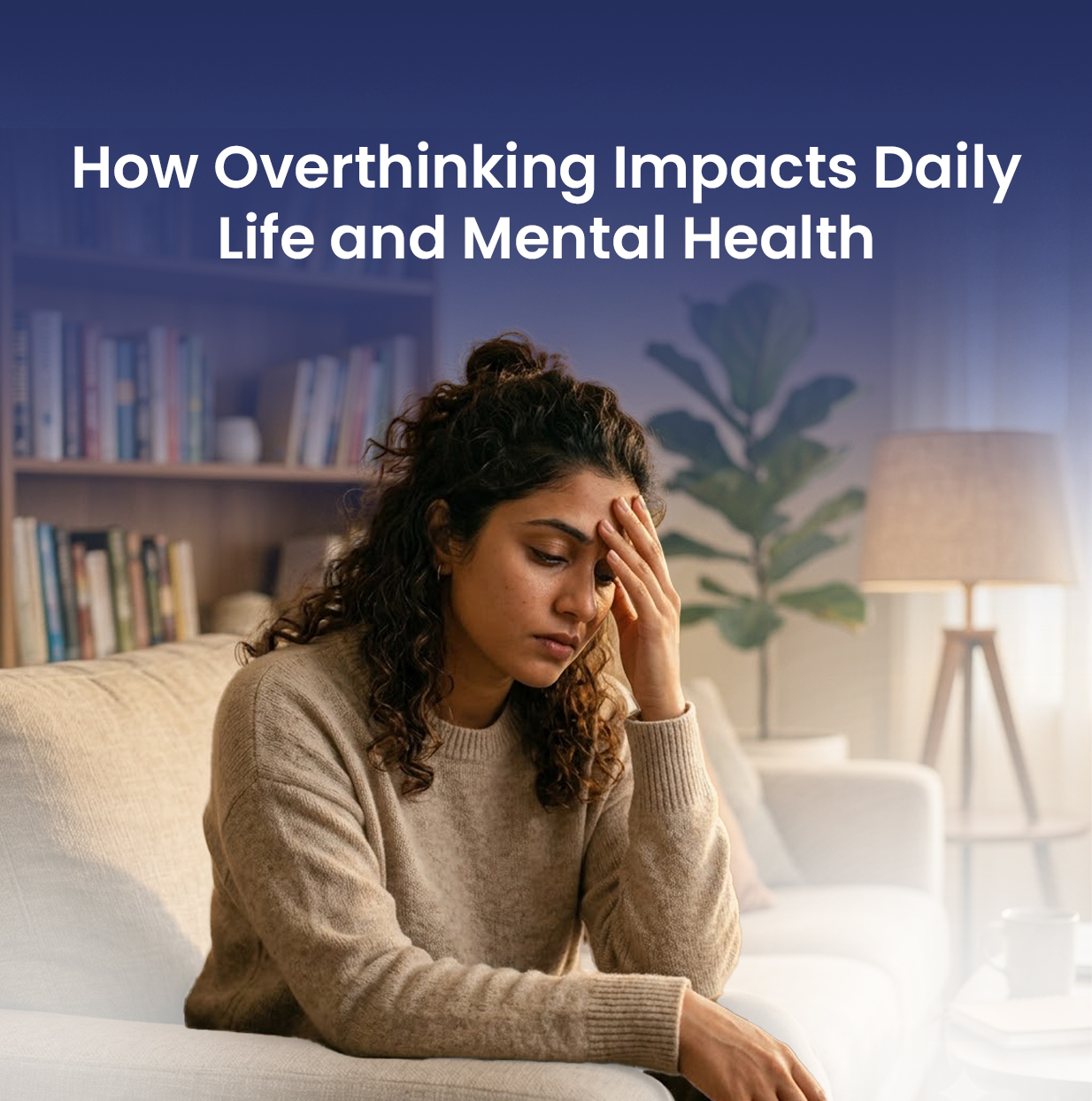
Thinking ahead and being concerned about important matters is completely normal. In fact, it helps us prepare for challenges and make better decisions. But when a single thought keeps replaying in our minds, creating more worry than solutions, it can turn into overthinking.
Overthinking often begins with a simple question. However, instead of finding an answer, the mind creates dozens of new questions, possibilities, and worst-case scenarios. Over time, this habit can drain our mental energy, affect our relationships, disrupt our daily routines, and take a serious toll on our mental health.
So, when does healthy thinking become harmful? And how does it affect our everyday lives? Let’s take a closer look.
What Exactly Is Overthinking?
Overthinking is the habit of repeatedly thinking about a situation, problem, or possibility without reaching a conclusion or taking action. While healthy thinking helps us solve problems and make informed decisions, overthinking often leaves us feeling stuck.
Instead of focusing on solutions, the mind keeps circling around the same questions, doubts, and fears.
Common Signs of Overthinking
Some common signs that you may be overthinking include:
- Replaying past conversations repeatedly
- Constantly second-guessing your decisions
- Imagining worst-case scenarios
- Worrying excessively about things that haven’t happened
- Struggling to focus on the present moment
- Feeling mentally exhausted by your thoughts
- Having difficulty falling asleep because your mind won’t stop racing
Many people don’t realize they are overthinking because it often feels like problem-solving. However, if your thoughts are creating more stress than solutions, it may be a sign that overthinking has taken over.
How Overthinking Affects Daily Life
Overthinking does not stay confined to the mind. It gradually affects different areas of daily life, making even simple tasks feel overwhelming.
Reduced Productivity
When the mind is occupied with endless possibilities and worries, it becomes difficult to focus on the task at hand. People often spend more time analyzing than actually doing, leading to procrastination and decreased productivity.
Difficulty Making Decisions
Whether it’s choosing a career path, making a purchase, or responding to a message, overthinkers often struggle with decision-making. Fear of making the wrong choice can lead to delays and indecision.
Strained Relationships
Overthinking can create misunderstandings in relationships. A delayed text message, a short reply, or a casual comment may be interpreted negatively, causing unnecessary worry and emotional distress.
Sleep Disturbances
For many people, overthinking becomes most intense at night. The mind revisits past events or worries about future possibilities, making it difficult to relax and fall asleep.
The Connection Between Overthinking and Mental Health
Overthinking and mental health are closely connected. While occasional worry is a normal part of life, persistent overthinking can contribute to emotional and psychological challenges.
Increased Anxiety
Constantly worrying about future events keeps the mind in a state of alertness. Over time, this can increase feelings of anxiety and make everyday situations seem more stressful than they actually are.
Emotional Exhaustion
Thinking about the same issue repeatedly can drain mental energy. Individuals may feel emotionally tired, overwhelmed, and unable to enjoy activities they once found relaxing.
Low Self-Confidence
Overthinking often involves self-criticism and self-doubt. Repeatedly questioning decisions, actions, and abilities can gradually affect self-esteem and confidence.
Risk of Depression
When people continuously dwell on past mistakes, disappointments, or negative experiences, it can lead to feelings of sadness, hopelessness, and helplessness. This is why addressing overthinking early is important for maintaining emotional well-being.
Practical Ways to Break the Cycle of Overthinking
The good news is that overthinking is a habit that can be managed. With awareness and practice, it is possible to develop healthier thought patterns.
Focus on What You Can Control
Many worries revolve around situations that are outside our control. Redirecting your attention to actions you can take today helps reduce unnecessary stress.
Set Limits for Decision-Making
Giving yourself a reasonable deadline for making decisions can prevent endless analysis and encourage action.
Stay Present
Mindfulness practices, breathing exercises, and meditation can help bring your attention back to the present moment instead of dwelling on the past or worrying about the future.
Challenge Negative Thoughts
Ask yourself whether your concerns are based on facts or assumptions. Often, overthinking magnifies problems that may never actually occur.
Maintain Healthy Daily Habits
Regular physical activity, quality sleep, balanced nutrition, and social connections can significantly improve emotional resilience and reduce mental stress.
Finding Peace Beyond Overthinking
Overthinking may feel like a way to stay prepared for life’s challenges, but in reality, it often creates more stress than solutions. Learning to recognize unhealthy thought patterns is the first step toward regaining mental clarity and emotional balance.
If overthinking is affecting your daily routine, relationships, work, or sleep, seeking support can make a meaningful difference. Today, online counselling services provide a convenient and confidential way for individuals to access professional mental health support from the comfort of their homes.
Working with an experienced online psychologist can help uncover the underlying causes of repetitive thinking patterns and provide practical strategies to manage them effectively. Professional guidance often helps individuals develop healthier coping mechanisms and improve emotional resilience.
Additionally, structured stress management and counselling approaches can equip individuals with techniques to handle everyday pressures, reduce anxiety, and gain better control over their thoughts. Rather than being trapped by endless worries, people can learn to respond to challenges with greater confidence and clarity.
Remember, not every thought deserves your attention. Sometimes, the healthiest thing you can do is let go of what you cannot control, focus on what truly matters, and give yourself the support needed to move forward with peace of mind.